
Cutting SaaS Costs by Forty Percent through the Retail AI Pilot Model
Understanding the New Economics of SaaS Cost Reduction in Retail
Retail organizations have entered a period where technology spending is no longer shaped by a handful of enterprise systems but by the accumulated weight of dozens of SaaS platforms operating across the business. What once resembled a manageable digital ecosystem has evolved into a distributed network of applications, micro solutions, and workflow specific tools each with its own pricing model, data feed, and administrative overhead. Most mid-sized retail environments now operate between forty and sixty SaaS systems, a number that continues to grow as teams adopt niche platforms to solve immediate challenges rather than consolidate around a unified architecture.
This expansion introduces financial pressures that rarely appear in a single budget cycle but become significant when viewed across a three- to five-year horizon. The industry’s shift from capital expenditure to subscription-based operational expenditure promised agility, yet for retailers balancing store operations, omnichannel commerce, supply chain variability, and real-time analytics, the accumulation of SaaS has produced a new category of inefficiency. Each additional platform brings another layer of licensing, integration complexity, and support requirements.
Ultimately, retailers are not overspending because they are investing ambitiously in digital transformation, they are overspending because they are maintaining a long tail of tools that no longer deliver proportional value. Retail organizations have entered a period where technology expenditure is no longer dictated by a few core systems but by the combined weight of dozens of SaaS tools distributed across business units. What once resembled a manageable, centralized architecture has quietly transformed into a fragmented digital ecosystem driven by fast-moving operational needs. Teams adopt scheduling platforms, reporting engines, analytics layers, and workflow tools at the moment of necessity, rarely stopping to evaluate whether each addition strengthens or weakens the overall operating environment. As this pattern compounds year over year, cost expansion becomes subtle but inevitable.
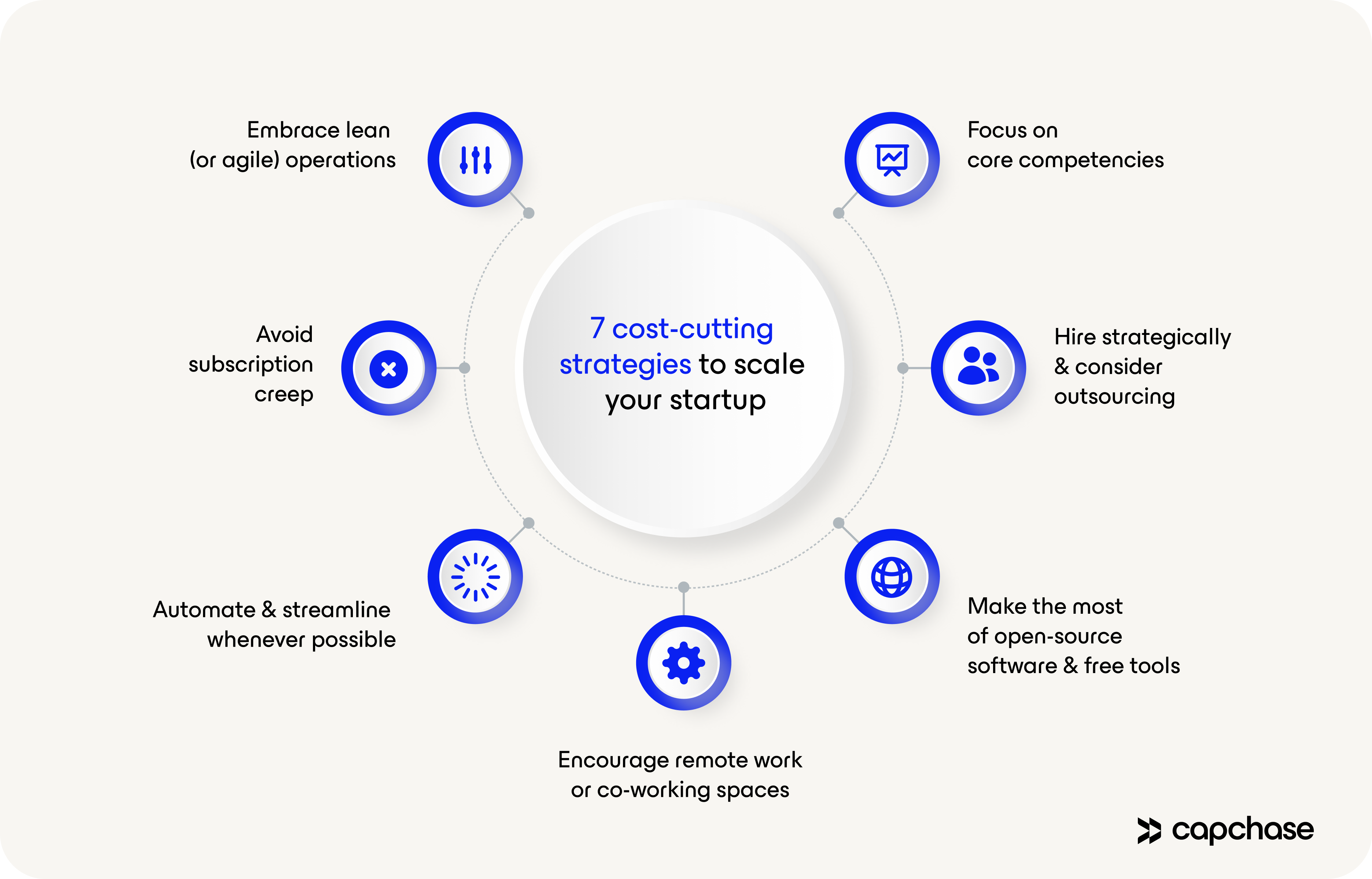
This silent expansion is what makes SaaS cost inflation difficult to detect in a single budget cycle. The shift from capital expenditure to subscription-based operating expenditure brought flexibility, but it also introduced an expanding set of fees, per-user licenses, and recurring renewals that scale with headcount rather than business value. The result is an economic imbalance: retailers are not overspending because they are over investing in transformation, but because they are maintaining a long tail of tools that deliver diminishing returns. This is why SaaS cost reduction has moved to the forefront of the modernization agenda, pushing leaders to rethink not only what tools they use but how they use them, why they were adopted, and whether they still serve the current operating model. This imbalance has pushed SaaS cost reduction to the center of the retail modernization agenda and created demand for approaches that optimize, consolidate, or replace high cost platforms without destabilizing operations.
Why SaaS Sprawl Has Become a Structural Barrier to Retail Modernization
The accumulation of SaaS tools within retail enterprises is not the result of poor strategy but decades of incremental decisions made under operational pressure. Store operations teams adopted scheduling systems to improve labor planning. Merchandising purchased separate analytics engines to refine forecasting. Ecommerce introduced customer engagement suites to strengthen digital loyalty. Finance onboarded reporting platforms to increase visibility. Each decision made sense at the time but the collective result is a fragmented software ecosystem in which multiple platforms perform overlapping functions.
As these tools proliferate, they introduce structural barriers that extend far beyond budget concerns. Data becomes siloed, weakening organizational intelligence. Teams switch between interfaces to complete single tasks. Integration teams spend more time maintaining brittle connections than building new capabilities. Finance struggles to predict technology costs because vendor fees are scattered across departments, regions, and hidden add-on modules.
Three patterns appear repeatedly across mid-sized and large retailers:
- Functional overlap becomes normalized, with multiple tools handling analytics, scheduling, reporting, and communications simultaneously.
- Licensing expands quietly, as new managers and regions add users without reassessing tool necessity.
- Shadow integrations emerge, connecting platforms without proper governance and creating fragile data pipelines.
Over time, these patterns form a structural barrier to modernization. Retailers cannot accelerate automation, AI adoption, or operational productivity while working within a mismatched, redundant software environment. This is the moment when targeted AI-driven SaaS replacement becomes strategically transformative.
The Strategic Value of a Targeted AI Pilot for High Impact Replacement
Retail organizations have reached a point where large-scale transformation programs feel too slow and too risky to address immediate SaaS cost pressures. Leaders recognize that their software stack has grown beyond what is financially rational, but retiring major tools across multiple departments seems operationally hazardous.
A targeted AI pilot provides a safer, more pragmatic alternative.
Rather than attempting to rationalize the entire SaaS ecosystem, the retailer selects one high-cost platform whose core functions can be replicated by an AI driven workflow system. The goal is not theoretical exploration, it is a live, operational demonstration showing that a major platform can be replaced in four to six weeks without disruption.
The pilot begins with a detailed assessment of the target SaaS tool: its feature set, integration points, workflow dependencies, and user groups. The AI model is configured to replicate the essential functions of the tool, delivering an operational prototype that stakeholders can test within their environment. The buildup of SaaS platforms across retail environments is not the result of mismanagement but the natural byproduct of years of reactive decision-making. Store operations adopt workforce tools to solve scheduling pain points; merchandising introduces analytics engines to refine forecasting; ecommerce deploys customer engagement suites to close experience gaps; finance invests in reporting systems to strengthen visibility. Each decision is logical in isolation. Yet together they form an ecosystem where multiple platforms perform overlapping functions, workflows become fragmented, and leadership loses visibility into which systems create value and which simply persist because they are difficult to retire.
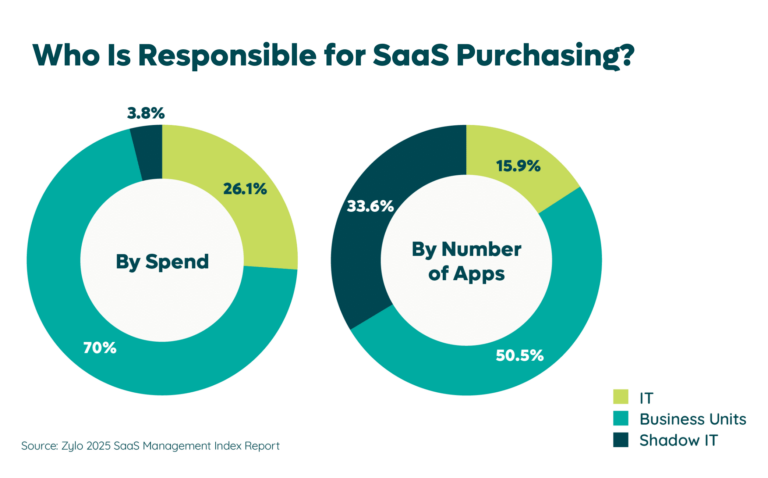
These charts highlight a structural reality across retail: IT teams control most SaaS spend, but business units purchase most of the apps. This divide accelerates sprawl because tools accumulate without centralized governance, cross functional evaluation, or workflow consolidation. The result is invisible cost leakage—platforms purchased for a single purpose remain in place long after their business justification fades. Data becomes siloed, integrations grow brittle, and employees navigate multiple systems just to complete routine tasks. Over time, the software estate becomes a constraint on performance, making it nearly impossible to accelerate modernization or execute AI driven transformation. In these conditions, targeted AI replacement becomes not only feasible but essential.
This approach consistently delivers three major advantages:
- Operational risk remains controlled, as the pilot impacts a single tool rather than the full stack.
- Cost savings become tangible, with reductions ranging from thirty to fifty percent compared to legacy subscriptions.
- Workflow clarity improves, as the AI integrates into existing data sources rather than introducing new fragmentation.
With a working AI model that mirrors a high value SaaS tool, retail executives no longer need speculative ROI projections they see the replacement functioning live. This shifts organizational mindset from uncertainty to confidence, opening the door to broader modernization.
Reconstructing Core SaaS Functions through AI Driven Workflows
The strength of the AI pilot model lies in its ability to reconstruct the functional footprint of an existing SaaS platform without replicating its size, complexity, or cost structure. Traditional SaaS platforms are designed as broad horizontal solutions meant for diverse industries, and retailers often pay for capabilities they never use.
AI driven replacement works in the opposite direction: it rebuilds only what the retailer needs.
The pilot begins by mapping real usage patterns, not the entire feature list. Most retail teams utilize only fifteen to thirty percent of a SaaS tool’s capabilities. The AI system then ingests these workflows, integrates with relevant data sources, and reconstructs a streamlined operational layer that performs the required actions with greater intelligence and less overhead.
Through this reconstruction process, three capabilities deliver the most impact:
- Automated execution of routine workflows
- Intelligent decision support
- Integrated data alignment across store operations, merchandising, and finance
As these capabilities mature, the retailer transitions from multiple interfaces and siloed tools to a unified, adaptive operational layer.
Quantifying Real Savings and Productivity Gains in Retail Environments
One of the most compelling advantages of the AI replacement model is its ability to convert cost reduction from an aspiration into a measurable financial outcome. Traditional modernization programs often struggle to articulate clear economic value. The AI pilot flips this paradigm. It begins with a single high-spend tool and directly compares subscription cost versus AI operational cost.
The financial framework typically evaluates three pillars:
- Direct subscription savings, comparing annual licensing fees against AI operational overhead.
- Redundant tool elimination, as the pilot reveals overlapping systems that can also be retired.
- Productivity gains, with workflows consolidated into a single AI layer instead of multiple interfaces.
Across retail pilot engagements, several patterns consistently appear:
- Direct cost savings of thirty to fifty percent, with many retailers stabilizing at the forty-percent threshold.
- Workflow execution time reduced dramatically, as multi step tasks collapse into unified AI workflows.
- Improved decision accuracy as AI leverages consolidated, integrated data rather than siloed sources.
When captured in a structured financial model, these outcomes provide senior leaders with the evidence needed to scale modernization confidently.
Building a Scalable Roadmap for Targeted AI Replacement Across the Retail Stack
A successful AI pilot delivers more than cost reduction it establishes a repeatable modernization model. Retail executives no longer debate whether AI-driven replacement is viable; they have a live example proving it works within their own environment.
The next step is to convert this success into a scalable roadmap. This roadmap prioritizes high cost, low usage tools, sequencing replacements in a way that minimizes operational disruption. Each target undergoes evaluation for functional overlap, workflow fit, and integration complexity. If suitable, it enters the pilot pipeline.
Over time, retailers build a cascading sequence of AI replacements that:
- Reduce licensing cost
- Simplify integration architecture
- Consolidate workflows
- Strengthen data governance
- Accelerate operational intelligence
What begins as a single replacement becomes the foundation for broad portfolio optimization. AI evolves from a supplementary capability into the primary mechanism for delivering software functionality across the retail enterprise.
Start Your AI Pilot for SaaS Cost Reduction
If your retail organization is ready to reduce SaaS spend without disrupting operations, the most effective next step is a focused pilot. Our four- to six-week AI Pilot Program delivers:
- A high-resolution analysis of your target SaaS tool
- A working AI replacement aligned to your workflows
- Direct cost comparison and validated savings
- A roadmap for broader SaaS consolidation